OWENSBORO LEAK REPAIR CO.
Call (270) 229-8689
OWENSBORO LEAK REPAIR CO.
Call (270) 229-8689
December and January bring a different kind of leak risk in Daviess County — ice, cold snaps, and attic condensation that looks like a leak but is not.
Owensboro winters are not the deep, constant cold of the upper Midwest, and that is exactly why they cause roof trouble. Temperatures swing above and below freezing, December and January storms bring rain, sleet, and wet snow in quick succession, and a roof that was fine in October can start leaking by January. The damage is rarely dramatic. It is a slow drip, a damp patch in the attic, or a stain that appears after a thaw.
Winter leaks also come in two kinds that look alike from inside: a real roof leak, where water gets in through a failed joint or shingle, and attic condensation, where warm, moist air from the house meets a cold roof deck and turns to water. Telling them apart matters, because the fix for each is different, and sealing a roof will not stop condensation.
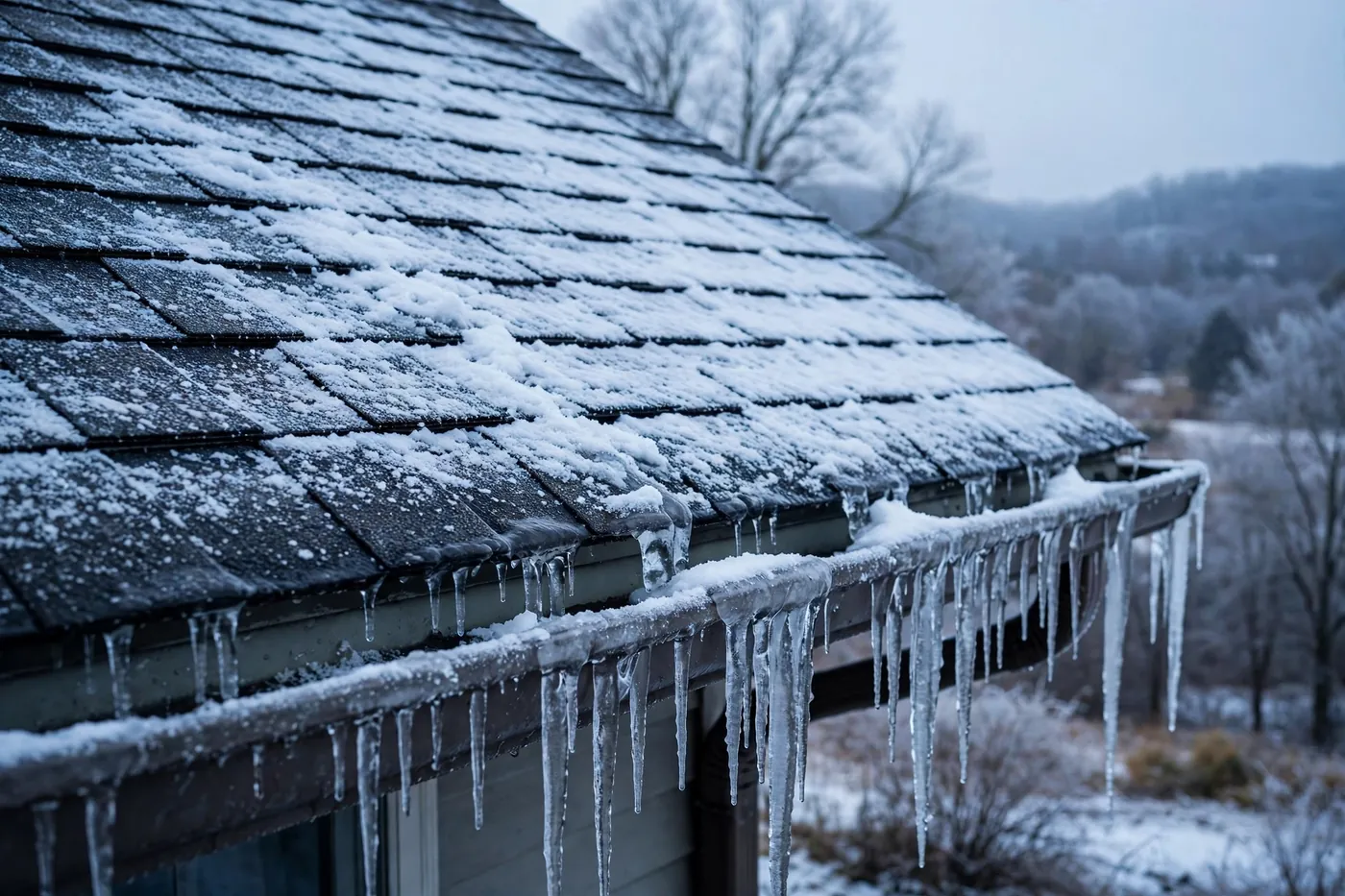
When snow or ice melts on a warmer upper roof and refreezes at a colder eave, it forms a ridge of ice that traps meltwater behind it. That water has nowhere to go but sideways and underneath the shingles, and it can leak into the attic even though the roof itself has no obvious hole. Owensboro's freeze-thaw swings make this pattern common, especially on north-facing slopes and on roofs with shaded eaves.
Prevention starts before winter. Clean gutters and downspouts so meltwater can drain instead of pooling at the eave. Check that attic insulation is even and that warm air is not leaking into the attic from below, because a warm attic is what melts the snow unevenly in the first place. If ice dams have formed in past winters, note where — the same eaves tend to be trouble again.
A December or January storm in Daviess County often brings wind-driven rain, sleet, and wet snow together, and that combination tests flashing joints in a way summer rain does not. Sealant that was flexible in summer turns stiff in cold weather, and a joint that sealed fine in warm conditions can open a crack when temperatures drop sharply overnight.
Before winter, a ground-level check of flashing at chimneys, walls, and valleys is worth doing, along with a look at vent boots for cracks. You do not need to climb onto the roof to spot most of this — binoculars from the ground, plus a safe attic check, cover the usual failure points. Anything that looks lifted, cracked, or pulled away should be looked at properly before the first hard freeze, not after.
Condensation happens when warm, moist air from showers, cooking, and heating rises into a cold attic and meets the underside of a cold roof deck. The moisture condenses on the wood, drips onto insulation, and can stain a ceiling in a way that looks exactly like a roof leak. The difference is the source: no rain is needed, and the dampness often appears on cold mornings rather than after storms.
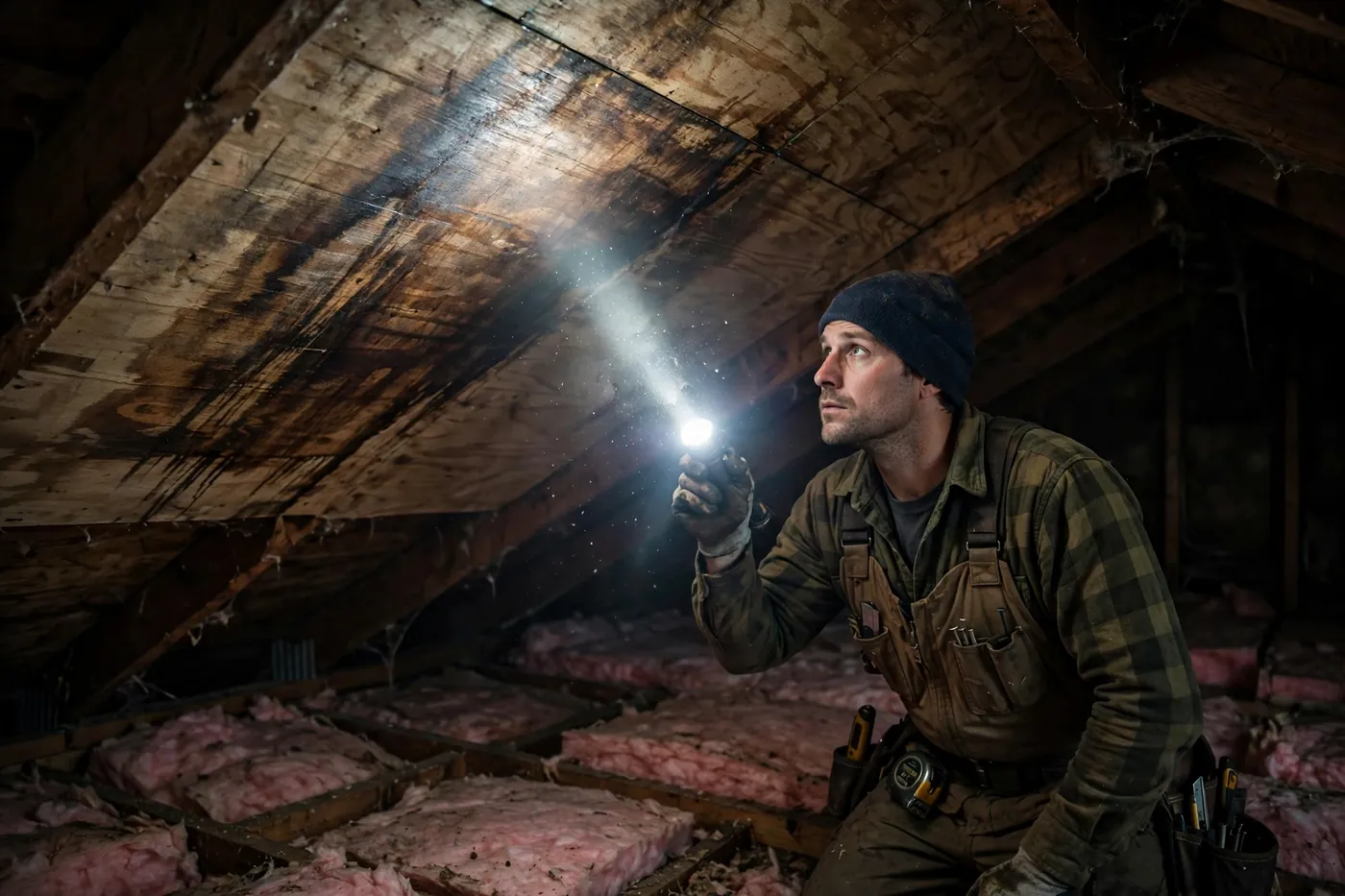
Telling condensation from a leak takes an attic look. Condensation tends to show as widespread dampness, frost on nails or decking in very cold weather, and damp insulation across a broad area, rather than a single trail leading to one joint. Ventilation and air sealing matter here — bathroom and kitchen vents should exhaust outside, not into the attic, and gaps that let warm house air into the attic should be sealed. Fixing the roof will not fix condensation, and fixing condensation will not fix a real leak, so getting the diagnosis right saves a wasted repair.
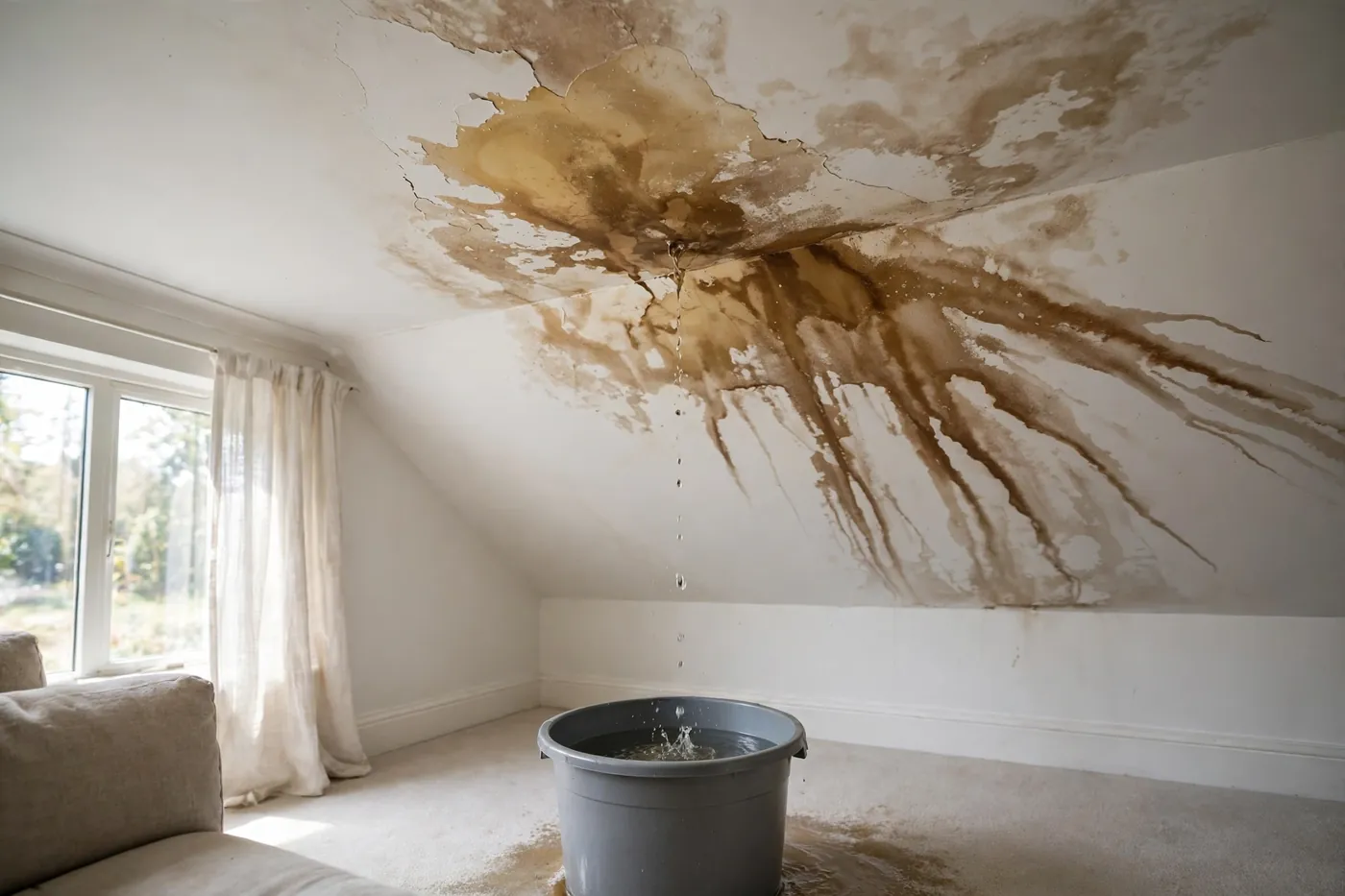
Winter is a bad time to discover a leak, but it is a good time to watch for one. After a storm, check the attic if you can do it safely, and look for new dampness, staining, or frost that was not there before. Check ceilings in upstairs rooms for fresh stains, especially after a thaw, when trapped meltwater starts moving again.
Also watch for icicles. A few small icicles are normal, but large, thick icicles along one section of eave often mean meltwater is pooling there — the same pooling that feeds an ice dam. If you see that pattern, plus a new stain inside, treat it as a leak worth inspecting rather than a winter quirk to ignore until spring.
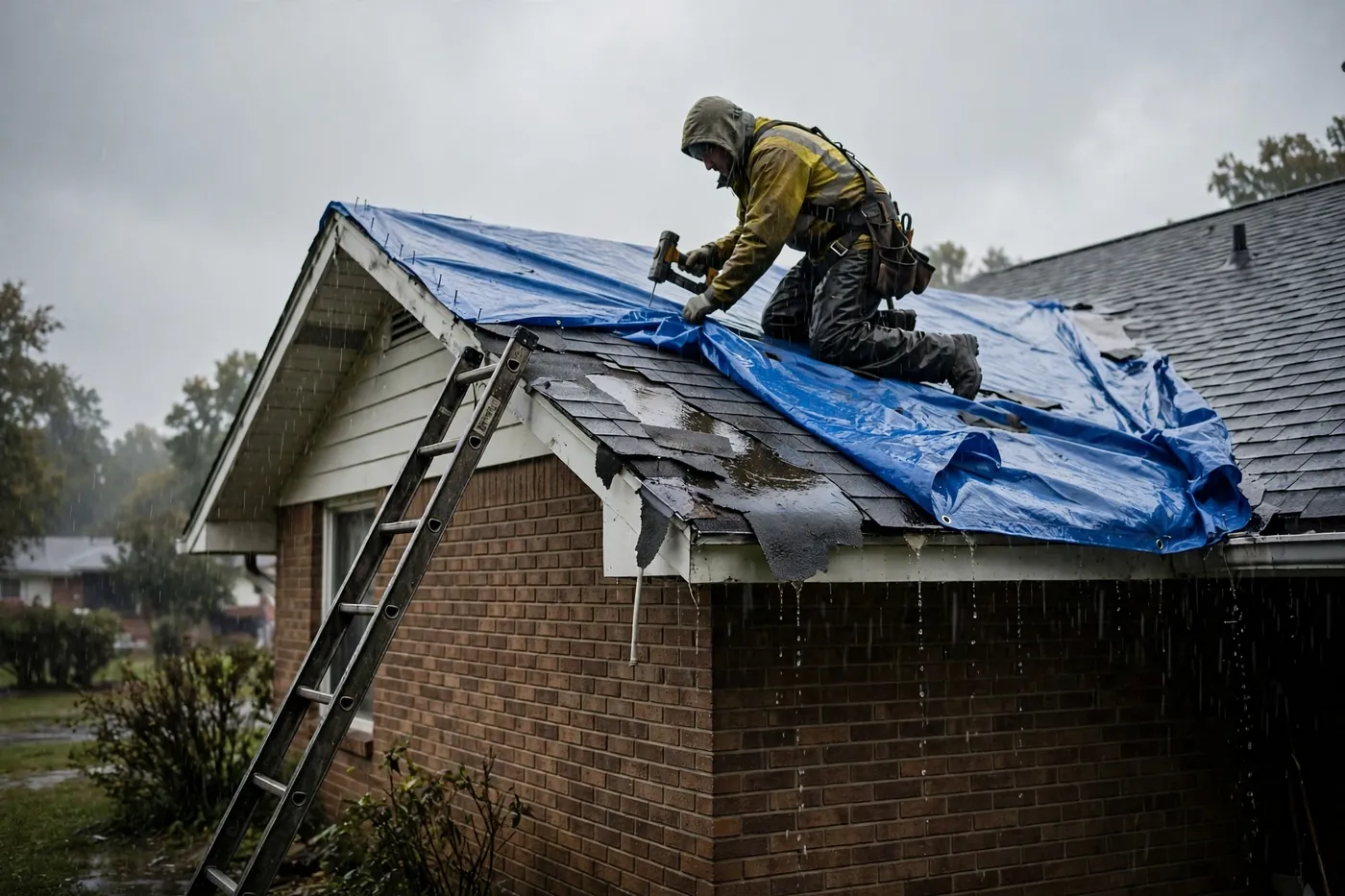
Some winter jobs can wait for a dry, mild day, and some cannot. A leak that is actively dripping should be contained inside — bucket, towels, power off near any affected fixture — and inspected as soon as conditions allow a safe look. A suspected ice dam or condensation problem, on the other hand, is often better diagnosed during cold weather, when the conditions causing it are actually present.
Either way, do not climb onto an icy or wet roof yourself, and do not try to chip ice off eaves with tools — that damages shingles and gutters, and a fall on ice is a serious risk. Containment inside, notes about when the dampness appears, and a proper inspection in safe conditions will do more for the roof than a rushed winter climb.
The simplest winter checklist is short, and it is best done in late autumn. Clear gutters. Check flashing and vent boots from the ground. Make sure vents exhaust outside. Look in the attic once, with a flashlight, and note anything damp or stained so you have a baseline to compare against after winter storms.
Then, during winter, check the attic again after the first big storm and after the first thaw. That pair of checks — one before winter, one during it — catches most winter leaks early, while they are still small, and it gives any inspector a clear before-and-after picture of what changed.
Call now — emergency calls come first.
TAP TO CALL NOW